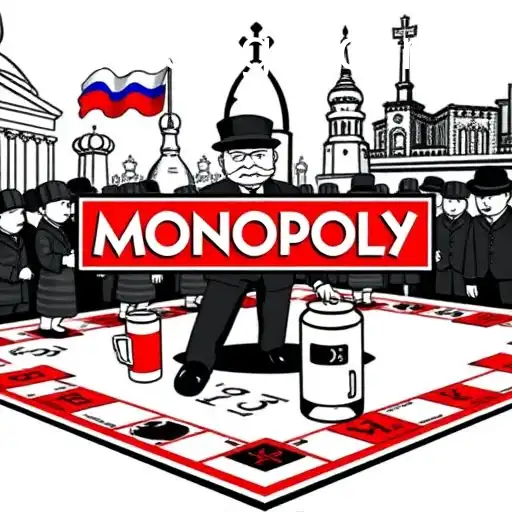
The Monopoly of Tsars: A Historical Overview
The term 'monopoly' often conjures images of powerful corporations or board games. However, the historical landscape of monopolies is vast and varied, with one intriguing chapter written under the reign of the Tsars. The Tsars, the autocratic rulers of Russia, wielded their power to create and sustain monopolies that profoundly impacted the Russian economy and society.
The Genesis of Tsarist Monopolies
As early as the 16th century, the Tsars of Russia began to establish state-controlled monopolies as a means to consolidate their power and control over critical resources. This was a strategic maneuver to ensure the centralization of power in the hands of the Tsar, minimizing the influence of rival nobles and merchants. The monopolies covered a range of industries, from salt and fur to vodka and metals, which were crucial to the nation's economy.
The Tsarist monopoly system was characterized by the exclusive right granted to specific individuals or groups to produce or sell certain goods. The government would issue permits or charters, allowing these entities to operate without competition. In return, these privileged entities would provide the government with a portion of their profits, thereby filling the state's coffers.
Impact on the Economy
While the monopolistic policies of the Tsars aimed to strengthen the state's fiscal position, they also had significant and sometimes adverse effects on the economy. The monopolization of essential goods often led to inflated prices and reduced availability, which burdened the common people and stifled the growth of private enterprise. For instance, the vodka monopoly, established in the 17th century, was a major source of revenue for the state but also contributed to widespread alcoholism, a social issue that Russia continues to grapple with.
Industries under monopoly control saw little innovation due to the lack of competition, and corruption became rampant as officials often engaged in bribery to secure monopoly rights. The inefficiencies generated by these monopolies hindered Russia’s economic progress, particularly when compared to Western Europe, where competitive markets and innovation drove rapid industrialization and growth.
Political Implications
The monopolies under Tsarist rule were more than just economic tools; they were political instruments that reinforced the absolute power of the Tsar. By controlling the nation’s most valuable resources, the Tsars were able to weaken the influence of the nobility and suppress potential unrest. The wealth accumulated through these monopolies funded the expansion of the Russian Empire and its military endeavors, thus maintaining the Tsar's dominance both domestically and abroad.
However, this grip on power was not without its challenges. One significant political repercussion was the growing discontent among the lower classes and burgeoning bourgeoisie, who felt oppressed by the monopolistic practices. This dissatisfaction laid the groundwork for revolutionary sentiments that would eventually culminate in the Russian Revolution of 1917.
The Vodka Monopoly: A Case Study
One of the most infamous Tsarist monopolies was that of vodka. Initiated by Tsar Ivan IV, also known as Ivan the Terrible, the vodka monopoly became a central part of Russia’s fiscal policy. By controlling vodka production and pricing, the state could generate substantial revenue. Taverns, known as kabaks, were state-controlled, and the profits from vodka sales were integral to the national budget.
This monopoly had profound social and economic implications. It suppressed private entrepreneurship within this sector and encouraged alcohol dependence among the population, which the state cynically exploited. The vodka monopoly became a contentious issue, and the subject of much debate, reflecting the broader tensions between state control and individual liberty within Tsarist Russia.
The End of Tsarist Monopolies
The end of Tsarist monopolies came with the Russian Revolution and the subsequent rise of the Soviet regime. The new government dismantled the old systems as part of their broader agenda to eliminate the vestiges of Tsarist autocracy and implement communism. Nevertheless, the legacy of these monopolies lingered, affecting Russian society and economy long after the fall of the Tsars.
The transition from Tsarist autocracy to Soviet communism marked a profound shift in the governance and economic framework of Russia. While the Soviet approach was different in ideology, the centralization of power and control over economic resources bore similarities to the Tsarist system.
Legacy and Reflections
The monopolies established under Tsarist rule left an indelible mark on Russian history. They were emblematic of the centralization of power that characterized the governance style of the Tsars. This centralization played a significant role in shaping the political and economic landscape of Russia, creating a legacy that influenced both the Soviet era and beyond.
Understanding the history of monopolies under the Tsars offers valuable insights into the complexities of power dynamics in Russia. It reflects how economic tools can be wielded for political ends and highlights the enduring consequences such policies can have on society. In this historical context, the Tsars' monopolies serve as both a cautionary tale and a lens through which to explore the intricate interplay between governance, economy, and society in Russia's past.